
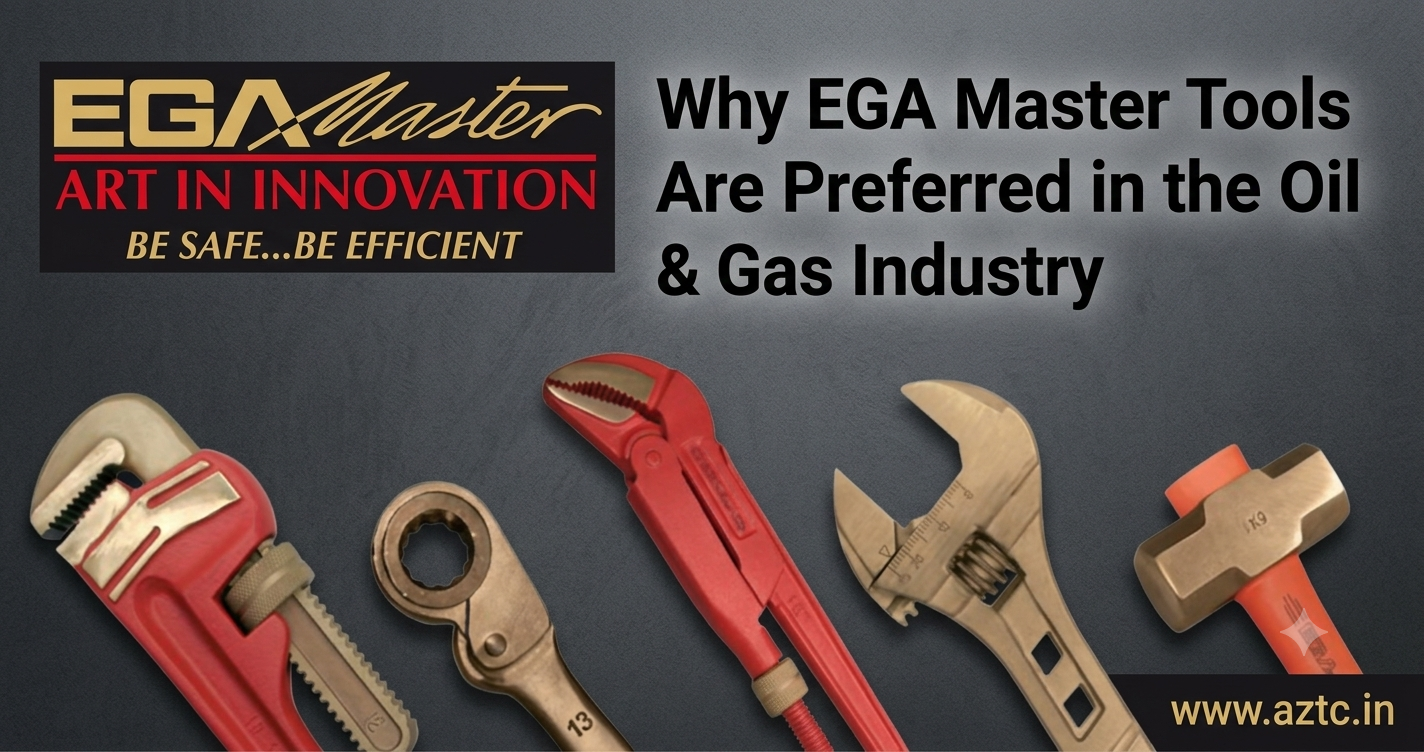
Why EGA Master Tools Are Preferred in the Oil & Gas Industry
Working in the oil and gas industry means dealing with some of the most demanding working conditions in the industrial sector. Offshore platforms, refineries, petrochemical plants, pipelines, and maintenance facilities often involve flammable gases, high-torque applications, work at height, and other situations where the right tools are an important part of workplace safety.
In these environments, a conventional hand tool may not always be suitable. Tools used in potentially explosive areas need to meet specific safety requirements, while maintenance teams working at height also need reliable ways to prevent tools from being dropped.
This is where EGA Master comes into the picture. Headquartered in Spain and supplying tools to more than 150 countries, EGA Master manufactures a wide range of industrial and safety tools designed for demanding applications. Its product range includes non-sparking tools, ATEX-certified equipment, AntiDrop solutions, hydraulic and controlled tightening equipment, and tool-control systems.
Here are some of the features that make EGA Master tools relevant to oil & gas and petrochemical applications.
Non-Sparking Tools for Hazardous Areas
One of the main concerns in oil & gas facilities is the possibility of ignition in areas where flammable gases, vapours, or dust may be present.
Using a conventional steel tool in such an environment can create a potential ignition risk through friction or impact. For this reason, specialized non-sparking tools are commonly used for maintenance work in hazardous areas.
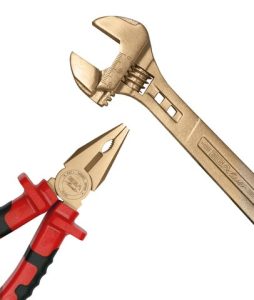
EGA Master offers non-sparking tools manufactured from different alloys, including Copper-Beryllium (Cu-Be), Aluminum-Bronze (Al-Bron), and ACETILEX®.
Copper-Beryllium (Cu-Be)
Copper-Beryllium tools offer high hardness and tensile strength compared with many other non-sparking alloys. The material is designed for applications where both non-sparking performance and mechanical strength are important.
Cu-Be tools can be used across Gas Groups I, IIA, IIB, and IIC, subject to the applicable safety and temperature requirements. Special consideration is required in acetylene environments because copper can react with acetylene and form copper acetylides.
Aluminum-Bronze (Al-Bron)
Aluminum-Bronze provides another option for non-sparking applications. It is generally used where the mechanical demands are lower and where a more economical non-sparking solution is required.
The material is suitable for Gas Groups IIA and IIB when used within the specified operating conditions.
ACETILEX® Alloy
Acetylene requires particular attention when selecting non-sparking tools because of the potential reaction between copper and acetylene.
EGA Master developed ACETILEX®, an alloy with copper content below 65%, specifically for applications involving acetylene-rich environments.
For facilities where acetylene is present, selecting a tool material designed for that environment is an important part of the safety assessment.
AntiDrop Tools for Work at Height
Dropped tools are a serious concern on offshore platforms, drilling rigs, refinery structures, scaffolding, and other elevated work areas.
A tool falling from height can injure personnel below, damage equipment, or interrupt an operation.
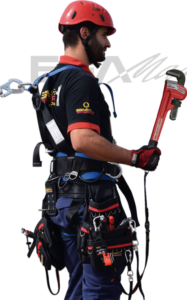
EGA Master’s AntiDrop range is designed with this type of work in mind. Instead of simply attaching a lanyard to a conventional tool, the tools incorporate dedicated tethering points into their design.
Depending on the tool and application, the system can include rated lanyards, attachment loops, and quick-release belts.
These solutions are designed to support dropped-object prevention practices and DROPS requirements for work at height.
Hydraulic and Controlled Tightening Equipment
Maintaining the integrity of bolted joints is critical in oil & gas facilities. Flanges, pipelines, pressure systems, and other connections often require controlled tightening to achieve the required joint integrity.
EGA Master provides equipment for demanding tightening and maintenance applications, including:
Hydraulic torque wrenches and nut cutters for high-torque flange assembly and disassembly.
Digital torque wrenches for applications where torque and angle measurements need to be monitored and recorded.
ATEX-related solutions for environments where electrical equipment needs to meet specific hazardous-area requirements.
For maintenance teams, accurate torque application can help improve consistency and reduce the risk of problems associated with incorrectly tightened connections.
Tool Control and Asset Tracking
Tool management becomes increasingly important when maintenance work involves large teams, complex machinery, and critical equipment.
A tool accidentally left inside a machine, pipeline, valve assembly, turbine, or other equipment can become a source of Foreign Object Debris (FOD) and may result in additional inspection, maintenance, or downtime.
EGA Master addresses this area through its Tool Control Systems (TCS).
These systems can include:
RFID Tool Tagging – tools can be identified using RFID technology for easier tracking.
Smart Toolboxes and Cabinets – systems can record which technician has taken a tool and when it has been returned.
For maintenance departments, this type of tool-control approach can improve accountability and make it easier to identify missing equipment during shift changes or maintenance activities.
Certifications and Product Warranty
Oil & gas companies typically have strict requirements when purchasing tools and safety equipment. Documentation, certifications, quality systems, and product traceability can all form part of the procurement process.
EGA Master operates under several quality and management standards, including:
ISO 9001 – Quality Management
ISO 14001 – Environmental Management
ISO 37001 – Anti-Bribery Management
ISO 45001 – Occupational Health & Safety Management
EGA Master also provides an unlimited lifetime warranty on its standard hand tools, pipe tools, and non-sparking equipment, subject to the manufacturer’s warranty terms.



Standard Industrial Tools vs. EGA Master Safety Tools
Because gas maintenance requirements vary across sectors, no single toolkit fits every technician. Tool selection depends on the specific operational environment:
| Feature / Metric | Standard Industrial Tools | EGA Master Safety Tools |
| Spark Generation | Steel-on-steel friction can create sparks | Non-sparking Cu-Be, Al-Bron and ACETILEX® options |
| Hazardous Area Use | May not be suitable for explosive atmospheres | ATEX-certified options are available for applicable environments |
| Dropped Object Protection | Usually requires aftermarket tethering | Integrated AntiDrop solutions |
| Acetylene Applications | Standard materials may not be suitable | ACETILEX® option designed specifically for acetylene-rich environments |
| Warranty | Often limited according to manufacturer | Unlimited lifetime warranty on specified product ranges |
The correct tool should always be selected according to the specific hazardous-area classification, application, manufacturer specifications, and site safety requirements.
Copper-Beryllium vs. Aluminum-Bronze Non-Sparking Tools
| Feature / Property | Copper-Beryllium (Cu-Be) | Aluminum-Bronze (Al-Bron) |
| Hardness | Approximately 38–40 HRC | Approximately 25–30 HRC |
| Tensile Strength | Approximately 1110–1320 N/mm² | Approximately 780–980 N/mm² |
| Gas Group | IIC applications, subject to specified conditions | Generally IIA and IIB applications |
| Magnetic Property | Non-magnetic | Slightly magnetic |
| Durability | Higher mechanical strength for demanding applications | Suitable for general maintenance applications |
| Relative Cost | Higher | More economical |
Copper-Beryllium and Aluminum-Bronze are two commonly used alloys for non-sparking tools. However, they are not identical.
Their mechanical properties, magnetic characteristics, application suitability, and cost can differ considerably.
When Should You Choose Cu-Be?
Copper-Beryllium can be considered when the application requires greater mechanical strength, higher-torque performance, or non-magnetic tools.
Typical applications can include striking tools, socket sets, and other demanding maintenance operations.
When Is Al-Bron a Practical Option?
Aluminum-Bronze can be suitable for general maintenance work where extreme mechanical strength is not the primary requirement.
Applications may include hammers, striking tools, scrapers, and other maintenance tools used under appropriate hazardous-area conditions.
The final selection should always be based on the actual application, hazardous-area classification, required mechanical performance, and manufacturer’s specifications.
EGA Master ATEX-Certified Tools and Equipment
EGA Master’s product range covers more than conventional non-sparking hand tools. The company offers different categories of equipment intended for applications where hazardous-area requirements need to be considered.
1. Non-Sparking Hand Tools
EGA Master’s non-sparking range includes tools manufactured using different alloys, including Cu-Be, Al-Bron, and ACETILEX®.
Depending on the application, the range includes:
Striking wrenches
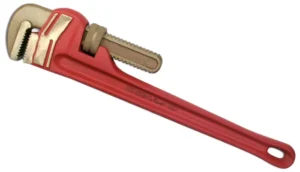
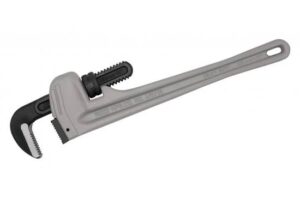
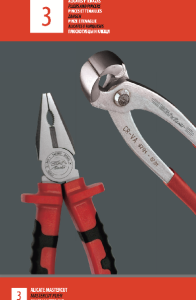
Pipe tongs
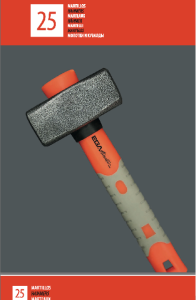
Hammers
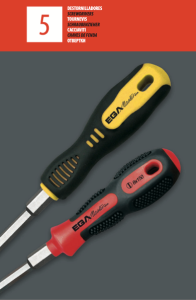
Screwdrivers
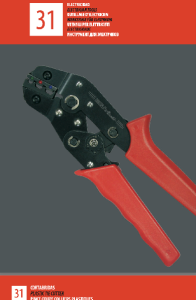
Pliers
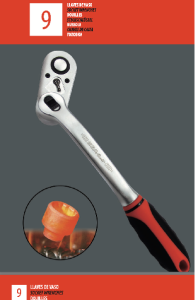
Sockets
Chisels
Socket drivers
The appropriate alloy and tool should be selected according to the application and hazardous-area requirements.
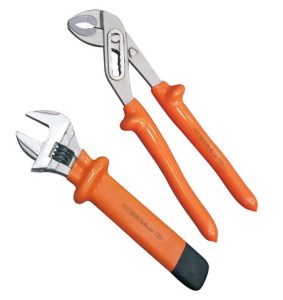
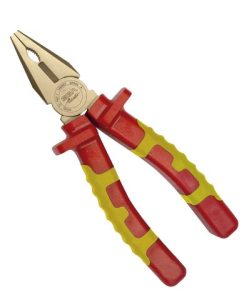
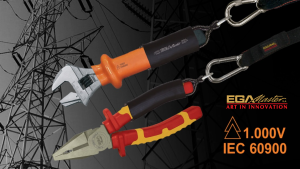
2. 1000V Insulated Non-Sparking Tools
Some maintenance applications require both electrical insulation and non-sparking properties. EGA Master offers tools combining IEC 60900 1000V insulation with BAM ATEX non-sparking certification. These include products such as:
Insulated pliers
Screwdrivers
Open-ended wrenches
Socket sets
Such tools can be relevant for maintenance teams working around electrical equipment in environments where explosive atmospheres may also be present.
3. Intrinsically Safe and Explosion-Protected Instruments
Oil & gas maintenance teams often require more than mechanical hand tools. Inspection, measurement, communication, and lighting equipment may also need to be suitable for hazardous areas. The range includes solutions such as:
Digital Torque Measurement
ATEX-certified digital torque equipment can allow technicians to measure and record torque and angle information in applications where hazardous-area requirements apply.
Lighting and Inspection Equipment
Explosion-protected lighting and inspection equipment can include:
LED headlamps
Hand torches
Inspection scopes
Communication and Field Equipment
Depending on the product and certification, the range can also include hazardous-area communication and measurement equipment such as:
Push-to-talk radios
Rugged mobile devices
Digital multimeters
Calibrators
4. Pneumatic and Hydraulic Power Tools
In certain hazardous areas, conventional electric power tools may not be appropriate because of the potential ignition sources associated with electrical equipment.
Pneumatic and hydraulic tools provide alternatives for demanding applications.
Pneumatic Tools
The range includes equipment such as:
Impact wrenches
Drills
Grinders
Bevelers
Saws
Hydraulic Equipment
Hydraulic solutions include:
Flange spreaders
Nut splitters
Hydraulic torque wrenches
These tools are designed for applications requiring high torque or controlled mechanical force.
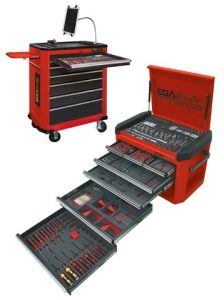
5. ATEX Safety Tool Sets and Kits
For maintenance teams that need a complete set of specialized tools, pre-configured tool kits can simplify procurement and deployment.
EGA Master’s range includes specialized kits for applications such as:
Refinery Maintenance
Tool sets containing non-sparking sockets, wrenches, and other maintenance equipment.
Mine and Acetylene Applications
Specialized tool configurations for mine clearing, petrochemical maintenance, gas utilities, and emergency response applications.
AntiDrop ATEX Kits
These kits combine non-sparking tools with tethering solutions for maintenance work at height, including applications on offshore drilling facilities.
Conclusion
In oil & gas and petrochemical environments, tool selection is closely connected to workplace safety, maintenance requirements, and hazardous-area procedures.
Non-sparking tools can help reduce the risk associated with mechanical sparks. AntiDrop solutions address the risk of dropped objects during work at height, while hydraulic and controlled tightening equipment can support critical bolting applications.
For facilities where hazardous-area compliance is required, it is important to select tools based on the actual ATEX classification, application, material compatibility, and manufacturer’s certification and documentation.
EGA Master offers a broad range of solutions covering non-sparking hand tools, ATEX-related equipment, insulated tools, AntiDrop systems, hydraulic equipment, and tool-control solutions.
EGA Master Tools Supplier in India
Arizona Tools Company supplies the EGA Master range for industrial customers in India.
Our range includes Cu-Be, Al-Bron and ACETILEX® non-sparking tools, 1000V insulated tools, AntiDrop solutions, and other specialized equipment for oil & gas, refinery, petrochemical, engineering, maintenance, and industrial applications.
If you are sourcing EGA Master tools for a plant, refinery, shutdown project, offshore operation, or maintenance requirement, our team can help you identify the appropriate product range based on your application.
Arizona Tools Company
Kolkata, India
Website: aztc.in
Email: info@aztc.in
WhatsApp: +91 9830030618 / +91 9830043866
For product specifications, catalogues, availability, and quotations, contact AZTC with your required tool type, application, and quantity.
Instant Online RFQs & Ready Stock: Check stock and request instant price quotes online for fast dispatch across India.
Save Big in Our Online Clearance Today!
Looking to upgrade your workshop with a calibrated torque wrench online? Explore at www.aztc.in/online-store discounted stock while supplies last!
Arizona Tools Company, is India’s authorized RIDGID distributor, based in Kolkata, with 15+ years serving hospitality, pharma, oil & gas, and industrial maintenance teams nationwide.