
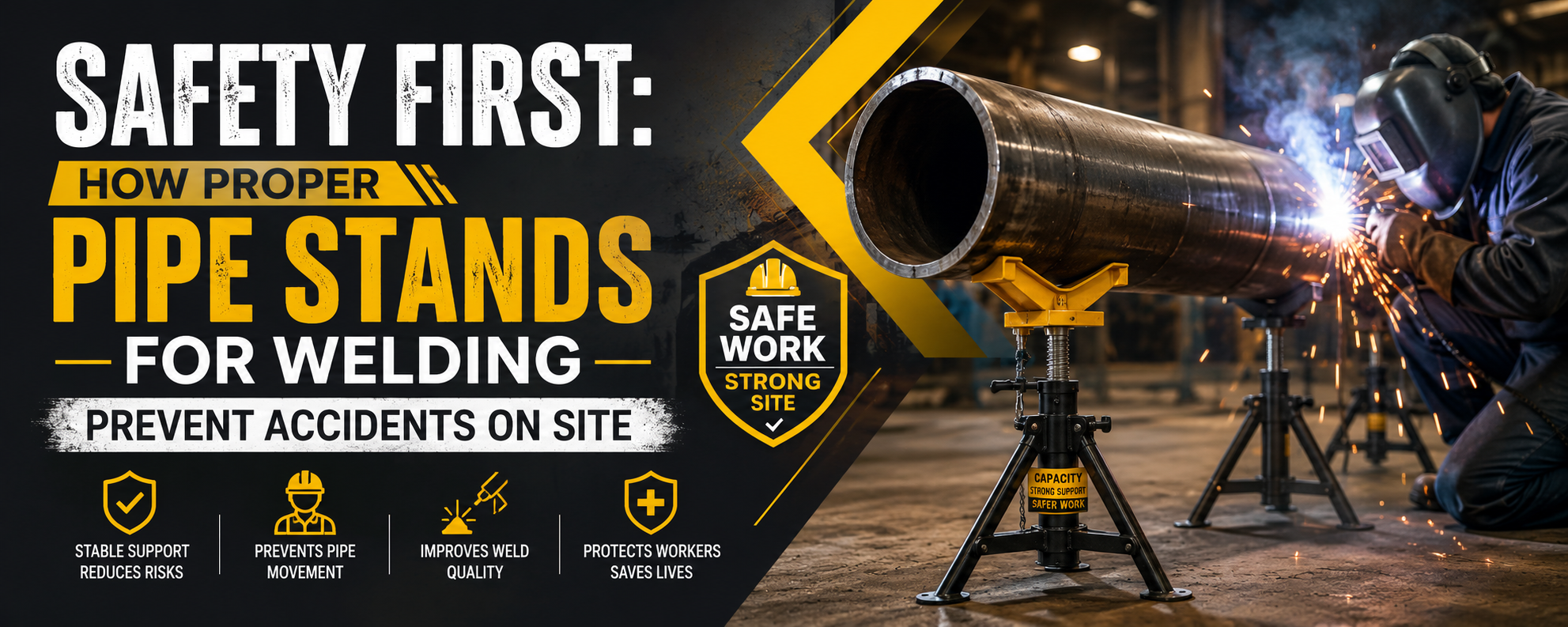
Safety First – How Proper Pipe Stands Needs for Prevent Accidents on Site
Welding safety equipment is the first thoughts for any safety concerned departments in the fabrication industries, and in this category, we often focus on helmets, gloves, and protective clothing. Those are important, but there is an another piece of equipment that quietly prevents serious site accidents i.e. THE PIPE STAND.
A pipe that rolls, shifts, or drops unexpectedly isn’t just a technical error; it’s a massive safety hazard. Here is why investing in proper pipe support is the smartest move you can make for your workstation
Why Pipe Stands Matter More Than You Think
Pipe welding involves heavy, awkward, and often cylindrical materials that—by their very nature—want to move. Without proper support, even a small mistake can lead to crushed fingers or ruined weld.
Manufacturers like RIDGID, and Reed Tools design pipe stands to hold significant loads safely. For example, some heavy-duty stands can support pipes weighing up to 4,500 kgs for smooth rotation while keeping the load locked down.
A stable pipe provides:
Precision: Stays perfectly aligned during the arc.
Ergonomics: Reduces physical strain on the welder.
Predictability: Eliminates sudden movements that lead to “struck-by” injuries.
Common Risks Without Proper Pipe Support
1. Unsecured pipes can rotate unexpectedly, specially during the welding the pipes.
2. If a pipe stand is overloaded or placed on uneven ground, it can tip and drop the pipe which cause accidents.
3. Hands placed near rollers or adjustment points are at risk.
4. Using a pipe stand beyond its rated capacity can damage the equipment and cause collapse.
According to safety guidance, failure to properly support pipes can lead to “stand tipping, falling pipe and serious injury.”
Pro Tips for Pipe Stand Safety
Safety is not just about having the right gear; it is always depend on about to how to you use it. Maintain that habits and rules into your daily workflow:
1. The Pre-Game Inspection
Before you load a heavy weight pipes, check for bent frames, worn-out rollers, or loose fasteners. If the equipment is fine with all aspects then start your works, if not than red-tag it and use a another pipe stand.
2. Respect the Load Rating
Every stand has a limit. Overloading doesn’t just risk a collapse; it makes the stand harder to adjust and significantly shortens its lifespan. Always match your stand to the specific diameter and weight of your project.
3. Level Ground is Non-Negotiable
This is the most common mistake on-site. Ensure all legs of pipe stands are extended as per instructions and standing on a flat, solid surface to prevent wobbling.
4. Watch Your Hands
Never adjust the height of a stand while it is under full load if you can avoid it. Keep your fingers away from the roller heads and adjustment collars where they could easily be trapped.
5. Lock It Down
Always double-check that the locking mechanisms and adjustment screws are fully tightened before you strike an arc. A “slow drift” in height can ruin a root pass or cause a load to become unbalanced.
Choosing the Right Type of Pipe Stand
Not all pipe stands are the same.
The type you choose affects both safety and efficiency.
Reed Manufacturing and RIDGID both offer a range of designs suited for different tasks.
Roller Head stands are the gold standard for welding and rotation, as they allow for smooth, manual turning of the pipe.
V-Head stand is the better choice, providing maximum stability for static tasks.
Adjustable High-Stand offers the best ergonomic height, saving your back by bringing the work directly to eye level.

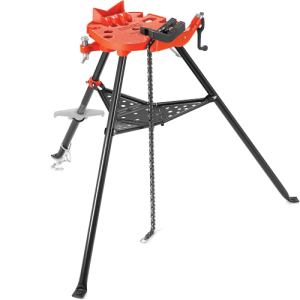
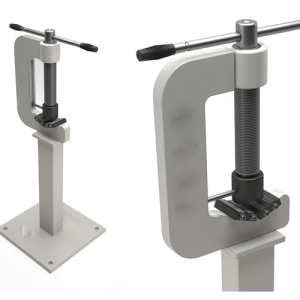
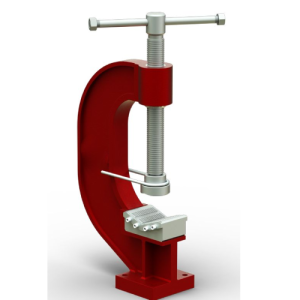
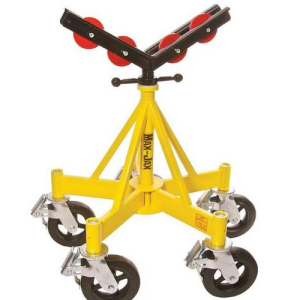
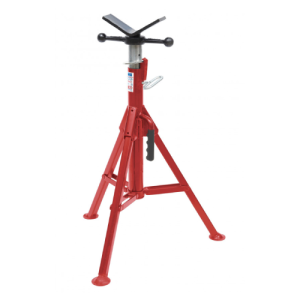
How Pipe Stands Improve Welding Workstation Setup
A proper welding workstation setup isn’t just about tools. It’s about workflow and safety.
Here’s how pipe stands fit into that:
1. Pipe stands maintain the workpiece level, which improves the weld accuracy and reduces rework.
2. Instead of holding or repositioning pipes manually, workers can focus on the weld itself.
3. Roller heads allow controlled rotation instead of risky manual turning.
4. Organized support reduces clutter and trip hazards.
A good setup doesn’t just prevent accidents. It help to work smoothly in their work place
Real-World Example: Heavy-Duty Pipe Support
Examples for workers specially for Pipe stands requires on basis of large-diameter pipe from RIDGID Tools.
These stands:
support large pipes (6″–24″)
handle high weight loads
include rollers for smooth movement
This example helps welder to maintain the control of the large diameters pipes to reducing both physical strain and accident risk.
Best Practices for a Safer Welding Environment
To check it all together steps and environments, here’s a quick checklist:
Use the right stand for the job
Inspect equipment daily
Set up on level ground
Stay within load limits
wear proper welding safety equipment
keep the workspace organized
These aren’t complicated steps, but skipping them is where problems start.
Conclusion
A proper welding workstation is an ecosystem. When you install high-quality pipe stands, you’re doing more than just holding pipes—you’re creating a controlled environment for pipe to complete task with any accidents. By prioritizing stable support, and to ensure that everyone on the crew goes home safe.
Don’t let your support be the weakest link in your safety chain.
Have you checked the weight capacity stickers on your stands lately?
Pipe stands might not get as much attention as other welding safety equipment, but they are important for preventing accidents and to complete task smoothly.
Arizona Tools Company, is India’s authorized RIDGID distributor, based in Kolkata, with 15+ years serving hospitality, pharma, oil & gas, and industrial maintenance teams nationwide.